


Solitaire Real Money: Win Cash
4.63.51K Reviews
App Specs
- Version
- 1.2
- Updated On
- License
- Free
- Downloads
- 100,000+
- Developer
- Yalovarz LTD STI.
- Categories
- Card
- Platform
- Android
Screenshots
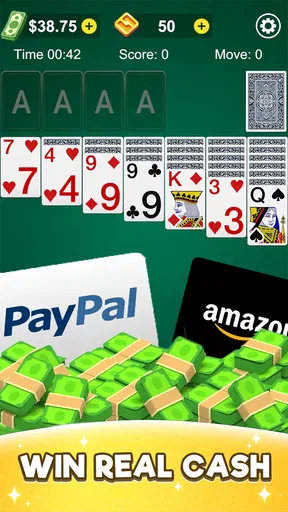
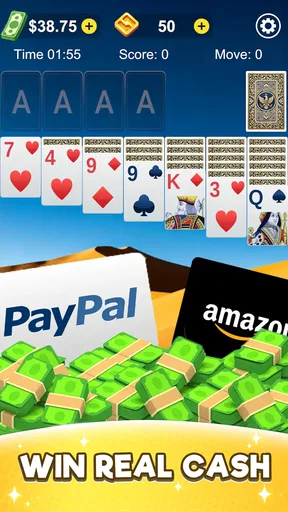

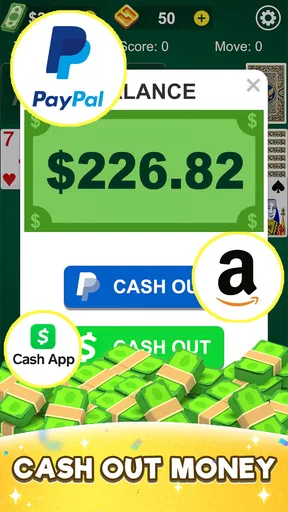
 Analysis by AppCompare
When I first opened Solitaire Real Money: Win Cash, I approached it as a familiar card game rather than as a serious money-making tool. That distinction matters. The foundation is classic solitaire, so it is easy to understand, but the real-cash angle changes how I think about every round, every pause, and every person who might use the same phone. It is free to install, belongs to the card-game category, and comes from Yalovarz LTD STI.
My overall impression is that it works best as a quick, focused solo game for an adult who already enjoys solitaire and is comfortable treating the cash element cautiously. It is less suitable as a casual family game, a shared entertainment app for children, or a replacement for a traditional offline solitaire app. The familiar format makes it approachable, but the mature age rating means I would not hand it to younger players without thinking carefully about the context.
How it fits into an everyday household routine
The most realistic use case for me is a short break during an ordinary day. Imagine waiting for an appointment, sitting on a train, or taking a few minutes after dinner while another person is using the television. A solitaire round gives that time a clear beginning and end. I do not need a group, a table, or a long explanation before playing.
That simplicity also makes the game tempting to leave on a shared device. In a household, though, I would treat it as an individual game, not a communal one. Solitaire depends on personal attention, and the money-related theme introduces a boundary that does not exist with a standard deck app. I would not let several people take turns casually on one account or assume that a child can use it just because the cards look harmless.
A shared tablet or phone can create practical confusion. One person may start a round and leave it open, another may tap through the screen without understanding what is happening, and a third may later assume the visible progress belongs to them. Even without inventing any particular account system, the safest routine is simple: one player, one clearly agreed session, and no switching users midway through a round.
I also found that the cash-focused framing changes the mood. Traditional solitaire is usually forgiving because the point is relaxation. Here, I would avoid playing while distracted, rushing between chores, or trying to recover from a frustrating session. If the game is being used in a living room where people are talking, watching television, or passing the phone around, a conventional solitaire app is the calmer choice.
Why the shared-device question matters
On a personal phone, the experience is easier to keep separate from everyone else. On a household device, I would establish a basic rule before installing it: the game belongs to the adult who chooses to play, and other household members should ask before opening it. That is not a feature claim; it is a sensible arrangement for any app connected with real-money play.
Worth Reading Before You Choose

EA SPORTS FC Mobile 26 Is a Bigger Football Game, but It Takes Time

Flipboard Shows What News Apps Must Do Beyond the Feed

Switching to Android Auto Means Rethinking Your Driving Routine

Google Calendar Makes a Crowded Week Easier to Manage

Ludo King Makes the Most of the Minutes Between Plans

Baby Panda World Brings Quick Play to Modern Phones, but Its Game Library Feels Busy
This is especially important when the device is used by teenagers or children. The cards themselves may look like an ordinary puzzle, but the store age classification is Mature 17+, so I would not present it as a family-friendly game. If a younger person wants a card game, an offline solitaire title or a regular card collection is a better fit because it avoids the same financial context.
For couples or roommates, coordination can be as simple as agreeing not to use the other person’s session and not to make decisions on their behalf. If someone wants to try it, I would recommend using their own compatible device and treating the installation as their own responsibility. That keeps the game from becoming an accidental shared activity with unclear ownership.
What I would check before the first round
The game is free, which lowers the barrier to trying it, but “free” should not be interpreted as “risk-free.” Before playing seriously, I would read every screen that appears around participation, withdrawals, or any transaction-related action. I would also avoid assuming that a win automatically means money is immediately available. The store summary presents the possibility of real cash, but responsible use means understanding the conditions shown inside the game before committing attention or funds.
I would begin with a short session and observe how the game presents its rules. The first goal should be orientation: learn where the cards are, understand what counts as a completed round, and notice whether the pace feels comfortable. Starting with the expectation of earning is, in my view, the wrong mindset. Starting with the expectation of evaluating the game is much safer.
Another useful habit is to decide on a personal stopping point before opening the app. Solitaire can encourage “one more round,” especially when a previous attempt ended close to completion. A time limit or a fixed number of rounds keeps the game in the category of entertainment rather than allowing it to take over an evening. On a shared device, that boundary also tells other people when the phone or tablet will be available again.
Learning the rhythm without overcommitting
The familiar card format is the strongest part of the design for new players. Someone who already knows solitaire can focus quickly on the decisions in front of them instead of learning a complicated control scheme. Someone less familiar should spend time understanding the basic flow before thinking about the cash element. That order prevents the reward theme from distracting from the actual game.
My practical advice is to play several low-pressure sessions as observation exercises. Notice whether you prefer quick moves or careful planning, whether you make mistakes when playing one-handed, and whether interruptions cause you to lose track of the board. These details matter more than they sound. A game that is comfortable during a quiet break may be a poor choice when you are constantly being called away.
I would also keep the app off a device that children regularly borrow if there is no clear separation between adult and child use. The mature rating is enough reason to create that boundary. A standard solitaire game can be left open without the same concern; this one deserves more deliberate handling because the premise goes beyond arranging cards.
Playing responsibly when money is part of the appeal
The most important trade-off is straightforward: the possibility of cash makes the game more engaging for some adults, but it also makes casual play harder to treat as completely casual. I would never use it to replace income, and I would not recommend it to someone who is already uncomfortable with competitive money-based activities. The game should fit inside a fixed entertainment budget, not become a way to solve financial pressure.
There is also a difference between enjoying solitaire and enjoying the surrounding reward structure. If what you really want is a quiet card puzzle, a conventional free solitaire app may serve you better. It removes the need to think about account ownership, age boundaries, and money-related decisions. Choosing that alternative is not missing the point; it may simply match your reason for playing more closely.
On the other hand, adults who find ordinary solitaire too passive may appreciate the extra sense of purpose here. The familiar rules provide an accessible starting point, while the cash-oriented format can make a short session feel more consequential. I can see the appeal for someone who wants a solo card game with a competitive edge, provided that person is willing to keep expectations realistic.
I would be particularly careful with “chasing” behavior. If a round goes badly, restarting immediately can feel like a harmless attempt to correct the result. Repeating that pattern for a long time changes the experience from measured play into emotional decision-making. My rule would be to stop when frustration becomes the main reason to continue. No card game is worth letting a disappointing result dictate the rest of the day.
Useful habits for personal and shared use
- Keep the player boundary clear: use one personal device or clearly identify whose session is active on a shared device.
- Read the in-game conditions: check the wording around any cash-related action instead of relying only on the short store description.
- Separate play from pressure: do not open a money-focused game when trying to fix an urgent financial problem.
- Choose quiet moments: solitaire decisions are easier when interruptions are unlikely, and this reduces accidental taps on a shared phone.
- Respect the age context: keep the game for mature users and choose a regular card game for younger household members.
These habits are not complicated, but they solve the problems I would worry about most. They also answer a question many people have after seeing the cash-focused description: yes, an adult can try it as entertainment, but the responsible approach is to manage the surrounding behavior rather than treating the reward angle as a promise.
Performance expectations and device fit
The current version is 1.2, and the listed minimum operating-system requirement is Android 5.1. That gives it a relatively broad device range on paper, which is useful if an older household phone is the only available option. Still, compatibility is not the same as comfort. A device with a small screen, an aging battery, or frequent interruptions may make card placement and reading less pleasant.
I would test it on the device that will actually be used for play rather than assuming that an older phone will feel fine because it can install the game. A solitaire board needs enough space for cards and controls to remain readable. This matters even more when the phone is shared, because different users may have different eyesight, grip, and comfort preferences.
I also would not judge the entire experience from a single short launch. The first session tells me whether the interface is understandable, but repeated sessions reveal whether the pace, presentation, and reward focus remain enjoyable. If the game starts to feel repetitive without the financial angle, that is useful information: perhaps I wanted a richer card challenge, not this particular format.
Who should try it, and who should skip it
I think it is worth trying for an adult solitaire fan who wants a familiar solo game with an added cash-oriented incentive. It may also suit someone who prefers short sessions and does not need multiplayer interaction. The card format is less intimidating than a complex strategy game, and the free entry point makes an initial evaluation straightforward.
I would skip it if your priority is completely relaxed, consequence-free play. In that situation, a standard solitaire app is a better recommendation. I would also skip it if you dislike reading participation terms, if money-based competition makes you uncomfortable, or if the only available device is regularly used by children.
It is not the right choice for a family game night either. There is no reason to force a solo, mature-rated, money-focused experience into a group setting when a physical deck or a family-friendly card game would create fewer boundaries. The same applies to a shared household account: if people cannot agree clearly on who is playing, do not install it there.
How it compares with ordinary solitaire
Compared with the usual offline solitaire alternative, this game offers a stronger reason to pay attention, but that comes with more responsibility. Offline solitaire wins on simplicity, privacy of purpose, and suitability for casual shared devices. Its goal is usually just to complete the layout. This title is more appealing when the possibility of cash is part of what motivates you.
Compared with broader card-game collections, it is more focused. You are not installing it for variety across many card formats; you are choosing it for a solitaire-centered experience. That focus can be a strength if you know exactly what you want, but it can feel limiting if you expect poker, rummy, or multiplayer modes in the same package.
Its published reception is encouraging, with an average rating of 4.6 from around 46 thousand ratings and roughly 3.5 thousand written reviews. It has also passed 100 thousand installs, so it is not an obscure experiment with no visible audience. I still treat those figures as a starting point rather than a substitute for checking whether its money-related approach fits my own habits.
Trust, age, and the household decision
The developer is Yalovarz LTD STI., and the game is listed as free with a Mature 17+ content rating. Those details shape my recommendation more than the card format does. A free download may be easy to share, but the age classification means I would explain the boundary plainly instead of hiding the app among ordinary games.
For a household, trust comes from clarity. Everyone should know who is allowed to play, whose device is being used, and that nobody should make cash-related choices for another person. I would not let a child watch over an adult’s shoulder and assume that observation is harmless if the game encourages interest in real-money play. A different card game is the better shared option.
The release date is Sep 29, 2025, so I would also keep expectations measured when evaluating a relatively recent title. The version number and audience figures show that it has a presence, but they do not tell me whether it will remain my favorite after weeks of use. I would reassess based on how transparent and comfortable the actual sessions feel, not simply on the novelty of the premise.
My household verdict is therefore specific: I would install it on an adult’s personal phone, try it with a predetermined limit, and keep it separate from children’s casual access. I would recommend it to a mature solitaire player who understands that the cash angle is an extra layer, not a financial plan. For everyone else in the home, especially younger users or people seeking uncomplicated relaxation, I would choose ordinary solitaire instead.
In the end, Solitaire Real Money: Win Cash is most convincing when treated as a focused adult card game rather than a shortcut to earnings. I like the accessibility of solitaire, the suitability for brief solo sessions, and the fact that it can give a familiar format a more competitive purpose. I am less comfortable with using it impulsively, sharing it without clear boundaries, or presenting it as harmless family entertainment. If you can keep those distinctions clear, it is a reasonable free game to test; if you cannot, the traditional alternative is the wiser choice.
Pros
- Simple solitaire rules make it easy for beginners to start playing.
- Short rounds fit well into quick breaks or casual sessions.
- Cash tournaments can add extra excitement beyond standard solitaire.
- The app may offer free-play options before entering paid contests.
- Progress and winnings can make repeated gameplay feel more rewarding.
Cons
- Cash games may require an entry fee
- creating a risk of losing money.
- Real-money features may not be available in every country or region.
- Withdrawals can involve identity checks
- minimum limits
- or processing delays.
- Winning often depends on speed and consistency
- not just basic card skill.
- Ads
- notifications
- or promotional offers may interrupt the experience.
FAQs for Solitaire Real Money: Win Cash
What is Solitaire Real Money: Win Cash?
Solitaire Real Money: Win Cash is a mobile card game based on classic solitaire, typically offering competitive matches, tournaments, or reward-focused challenges. Players may compete against others or try to achieve high scores within a time limit. The exact game modes, rewards, and availability can vary by location and app version, so review the in-game rules before participating.
Can I really win real money by playing Solitaire Real Money: Win Cash?
The app may advertise cash prizes or withdrawable rewards, but winning is not guaranteed. Results can depend on your skill, speed, ranking, opponent pool, tournament conditions, and applicable eligibility rules. Some rewards may be promotional or virtual rather than immediately withdrawable. Always check the payout terms, minimum withdrawal amount, fees, and regional restrictions before depositing money or entering paid contests.
Is Solitaire Real Money: Win Cash free to download and play?
The application may be free to install, but that does not necessarily mean every feature is free. Depending on the version and your region, it may include advertisements, optional purchases, entry fees, or paid competitive events. Read the payment details carefully before confirming a transaction, and remember that spending money can involve financial risk even when the game presents itself as casual solitaire.
Is Solitaire Real Money: Win Cash available everywhere?
Availability and real-money features can differ significantly between countries, states, and regions because cash-prize gaming is subject to local laws and platform policies. You may be able to download the app but still be unable to access withdrawals or paid tournaments. Age verification, identity checks, location permissions, and a supported payment method may also be required before using reward-related features.
What should I know about withdrawals, privacy, and safety?
Before playing for rewards, inspect the app’s privacy policy, terms of service, and withdrawal instructions. Cash-out requests may require personal details, identity verification, or a supported wallet and can be subject to processing times, limits, and fees. Use only official download sources, avoid modified versions, never share payment credentials unnecessarily, and set a spending limit so entertainment does not become an avoidable financial problem.


